What is Corporate Branding? Your Ultimate Guide
Unlock the power of a strong corporate brand to foster loyalty, attract top talent, and secure market leadership.
Define Your BrandKey Takeaways
- ✓ Corporate branding defines how an organization is perceived by all stakeholders.
- ✓ It encompasses visual identity, values, culture, and communication.
- ✓ A strong corporate brand builds trust, enhances reputation, and attracts talent.
- ✓ It differs from product branding by focusing on the entire organization.
How It Works
Articulate your company's mission, vision, values, and unique selling proposition. This forms the bedrock of your brand.
Develop a compelling story that communicates your purpose and resonates with your target audiences. Consistency is key here.
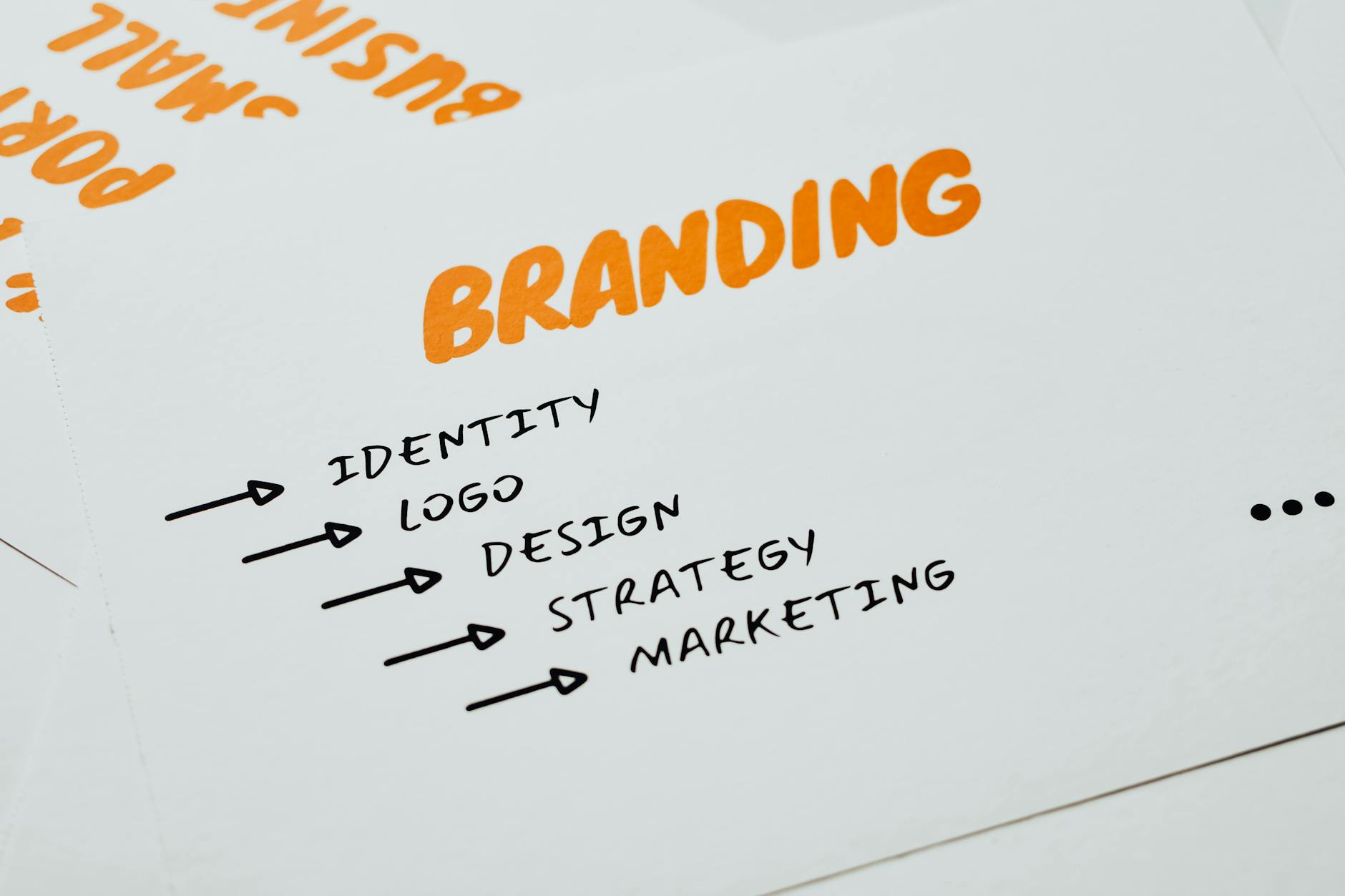
Create a distinctive logo, color palette, typography, and a consistent tone of voice. These are the tangible expressions of your brand.
Apply your brand guidelines across all touchpoints, internal and external. Regularly review and adapt your strategy as your organization evolves.
Understanding the Fundamentals of Corporate Identity
 Photo: César Guillotel / Pexels
The Strategic Pillars of a Strong Corporate Brand
 Photo: 小和尚 温柔的 / Pexels
Measuring Impact: How Corporate Branding Drives Business Growth
 Photo: Joe Chen / Pexels
Common Pitfalls and Best Practices in Corporate Branding
 Photo: Eva Bronzini / Pexels
Comparison
| Feature | Corporate Branding | Product Branding | Personal Branding |
|---|---|---|---|
| Scope | Entire Organization | Specific Product/Service | Individual Person |
| Primary Goal | Build Trust & Reputation | Drive Sales for Product | Establish Expertise & Influence |
| Key Stakeholders | Employees, Investors, Customers, Public | Consumers, Retailers | Peers, Clients, Recruiters |
| Duration | Long-term, Enduring | Product Lifespan | Career Lifespan |
| Focus | Values, Culture, Vision | Features, Benefits, Price | Skills, Experience, Personality |
| Flexibility | Less adaptable (core identity) | More adaptable (product variants) | Dynamic (evolves with career) |
| Internal Buy-in | ✓ (Crucial) | ✗ (Less direct) | N/A |
What Readers Say
"Understanding what is corporate branding completely transformed our approach to market. We've seen a significant increase in employee engagement and customer loyalty since focusing on our core values."
Sarah J. · New York, NY"This guide helped us clarify our brand identity and message. The impact on our investor relations and talent acquisition has been phenomenal; we're attracting much higher caliber candidates."
Mark D. · San Francisco, CA"By implementing the strategies for what is corporate branding, our company's market valuation increased by 15% in just one year. It's truly an investment that pays dividends across the board."
Emily R. · Austin, TX"While challenging to implement across a large organization, the principles of corporate branding outlined here are undeniably powerful. We're still working on full consistency, but the initial results are very promising."
David L. · Chicago, IL"As a non-profit, understanding what is corporate branding helped us articulate our mission more effectively to donors and volunteers. It's made a huge difference in our fundraising efforts and community outreach."
Jessica M. · Boston, MAFrequently Asked Questions
What is the primary difference between corporate branding and product branding?
Corporate branding focuses on the entire organization, its overarching values, mission, and culture, affecting all stakeholders. Product branding, conversely, centers on a specific product or service, aiming to differentiate it and drive its sales. While related, corporate branding provides the umbrella identity for all products and services.
Is corporate branding only for large corporations?
Absolutely not. While often associated with large entities, corporate branding is crucial for businesses of all sizes, from startups to SMEs. Every organization has an identity, and proactively shaping that identity through corporate branding helps build trust, attract talent, and establish credibility, regardless of scale.
How do I start building a corporate brand for my company?
Begin by defining your company's core mission, vision, and values. Then, understand your target audience and what makes your organization unique. Develop a compelling brand story and translate these elements into consistent visual and verbal assets. Finally, ensure your internal culture reflects your external brand promise.
What is the return on investment (ROI) of corporate branding?
The ROI of corporate branding can be substantial, though often indirect. It manifests in increased customer loyalty, higher employee retention, enhanced reputation, greater pricing power, and improved talent acquisition. These factors collectively contribute to sustainable revenue growth and market leadership, making it a critical long-term investment.
How does corporate branding impact employee morale and recruitment?
A strong corporate brand significantly boosts employee morale by instilling a sense of pride and shared purpose. It also acts as a powerful magnet for top talent, as prospective employees are drawn to companies with clear values, a positive culture, and a reputable image. This reduces recruitment costs and improves workforce quality.
Who within an organization is responsible for corporate branding?
Corporate branding is a collective responsibility, but it's typically led by the executive leadership (CEO, CMO) and managed by marketing, communications, and HR departments. Ultimately, every employee plays a role in embodying and delivering on the corporate brand promise through their daily actions and interactions.
Can a corporate brand recover from a major crisis or negative publicity?
Yes, but it requires strategic effort, transparency, and authentic action. A strong pre-existing corporate brand can provide a buffer of trust. Recovery involves acknowledging mistakes, demonstrating accountability, making amends, and consistently communicating positive changes and renewed commitment to core values. It's a marathon, not a sprint.
What are the future trends in corporate branding?
Future trends include an even greater emphasis on authenticity, purpose-driven branding, and corporate social responsibility (CSR). Digital presence, personalized experiences, and the ability to engage stakeholders across diverse platforms will also continue to grow in importance. Expect more dynamic and adaptive brand strategies.
Understanding what is corporate branding is the first step towards building a resilient, respected, and successful organization. By investing in your corporate brand, you're not just defining an image; you're shaping your legacy and securing your future in a competitive world. Start strategically building your corporate brand today to unlock its full potential for growth and influence.