Renting a Car in Germany: A Complete Guide for US Business Travelers
renting a car in Germany

Renting a Car in Germany: A Complete Guide for US Business Travelers

Unlock seamless corporate travel in Germany with our expert guide to car rentals, ensuring a smooth and efficient journey.

Plan Your German Drive

Key Takeaways

  • ✓ An International Driving Permit (IDP) is highly recommended, if not legally required, for US drivers.
  • ✓ Most rental cars in Germany are manual transmission; specify automatic if needed.
  • ✓ German Autobahns often have no speed limit, but many sections do, and strict rules apply.
  • ✓ Zero-tolerance policy for alcohol while driving is enforced for new drivers and professionals; generally, limits are very low.

How It Works

1
Pre-Book Your Rental

Secure your vehicle well in advance, especially for specific models or automatic transmissions. Compare prices from major international and local German providers online.

2
Gather Essential Documents

Ensure you have your valid US driver's license, an International Driving Permit (IDP), passport, and a credit card. Confirm insurance coverage details beforehand.

3
Understand German Road Rules

Familiarize yourself with Autobahn etiquette, speed limits, parking regulations, and signage. Knowledge of common German road signs is crucial for safe driving.

4
Inspect and Drive

Thoroughly inspect the vehicle for existing damage before leaving the lot and document it. Drive defensively and adhere to all local traffic laws to avoid fines.

Pre-Departure Essentials: Documents and Booking for German Car Rentals
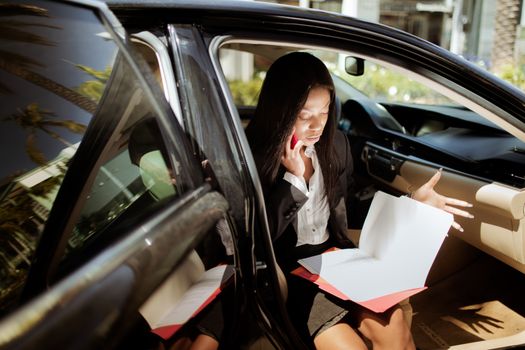
A businesswoman multitasking with phone and documents while seated in a car. Photo: RDNE Stock project / Pexels
For any US corporate traveler planning to navigate Germany's efficient road network, meticulous preparation is the cornerstone of a stress-free experience. The journey begins long before you touch down at Frankfurt or Munich. First and foremost, let's address the critical documents. Your valid US driver's license is a given, but its companion, the International Driving Permit (IDP), is where many questions arise. While some sources might suggest it's not strictly mandatory for short tourist stays, for business travel, and especially in the event of an accident or interaction with local law enforcement, an IDP translates your US license into multiple languages, making it universally understood. It provides an official translation of your driving credentials and is highly recommended by the ADAC (Germany's largest automobile club) and most rental agencies. Obtain your IDP from AAA or AATA in the US, ensuring it's issued at least a few weeks before your departure, as it's not available upon arrival in Germany. It's valid for one year. Alongside your licenses, your passport is your primary identification, and a major credit card (preferably one with good car rental insurance benefits) is essential for securing the rental and any deposit. Booking your rental car in advance is not just a recommendation; it's a strategic move for corporate travelers. Germany's car rental market is competitive, but last-minute bookings, especially for specific vehicle types like automatics or luxury models often favored by business professionals, can lead to limited availability and inflated prices. Utilize reputable international rental agencies like Sixt, Hertz, Europcar, Avis, and Enterprise, which have a strong presence across Germany's major airports and cities. Their online platforms allow you to compare rates, vehicle classes, and insurance options. For corporate accounts, inquire about specific business rates or loyalty programs that might offer additional perks or discounts. When booking, pay close attention to the vehicle's transmission type. Unlike the US, manual transmissions dominate the German rental fleet. If you are not proficient in driving a stick shift, explicitly request and confirm an automatic transmission, as these are often in higher demand and may carry a premium. Consider the size of the vehicle based on your itinerary and luggage. If you're transporting colleagues or significant equipment, a larger sedan or an estate (station wagon) might be more appropriate than a compact car. Factor in GPS navigation; while many modern rentals include it, confirming its presence or opting for a portable unit can save you from relying solely on your phone's data plan. Lastly, familiarize yourself with the rental agency's fuel policy – whether it's full-to-full, pre-purchase, or another option – to avoid unexpected charges upon return. Understanding these nuances before you even step foot in Germany will significantly streamline your car rental experience and allow you to focus on your business objectives rather than logistical headaches. Explore corporate travel solutions to integrate car rentals seamlessly into your itinerary.

Navigating the Autobahn and German Road Regulations

Driving in Germany, particularly on its legendary Autobahns, is an experience unlike any other, but it comes with a strict set of rules and expectations. For the uninitiated US driver, understanding these regulations is paramount to ensuring safety and avoiding costly fines. The most famous aspect of the Autobahn is its sections without a fixed speed limit. However, this doesn't mean it's a free-for-all. An 'advisory' speed limit of 130 km/h (approximately 80 mph) is widely recommended, and in practice, many sections do have posted speed limits, especially near urban areas, construction zones, or in adverse weather conditions. These limits are strictly enforced, often by hidden cameras, and fines can be substantial. The cardinal rule on the Autobahn is to always keep to the right lane unless you are actively overtaking. The left lane is exclusively for passing, and lingering there is considered a serious offense, potentially leading to fines or even more severe penalties. When passing, do so decisively and return to the right lane promptly. Undertaking (passing on the right) is strictly forbidden and dangerous. Beyond the Autobahn, German road signs are internationally recognized but have specific nuances. Blue signs typically indicate motorways or directions, while yellow signs are for federal roads. Pay close attention to signs indicating 'Umleitung' (detour), 'Baustelle' (construction site), and 'Einbahnstraße' (one-way street). Traffic lights operate similarly to the US, but turning right on red is universally prohibited unless explicitly indicated by a small green arrow sign. Roundabouts are common, and the general rule is to yield to traffic already in the roundabout, unless signs dictate otherwise. Signaling your exit is crucial. Parking in Germany requires vigilance. Look for signs indicating parking restrictions or availability. 'Parkscheibe' (parking disc) zones require you to display a disc showing your arrival time, while 'Parkschein' (parking ticket) machines issue tickets that must be displayed on your dashboard. Illegally parked cars are subject to towing or significant fines. Pay attention to environmental zones, known as 'Umweltzonen', in many German cities. These zones require vehicles to display a 'Feinstaubplakette' (emissions sticker) to enter. Most rental cars will already have this, but it's wise to confirm if your business destination is within such a zone. Lastly, Germany has very strict impaired driving laws. The blood alcohol content (BAC) limit is 0.05%, but for new drivers (less than two years of experience) and professional drivers, it's a zero-tolerance policy (0.0%). Penalties are severe, including hefty fines, license suspension, and even imprisonment. It's best to abstain from alcohol entirely if you plan to drive. Always carry your driver's license, IDP, passport, and rental documents with you while driving. Familiarizing yourself with these regulations will not only ensure a smooth journey but also demonstrate respect for local laws and customs, enhancing your professional image during your business trip. Understanding these rules is as important as knowing your destination. Learn more about international business etiquette.

You may also find Rental Car Germany useful.

Insurance, Fuel, and Emergency Protocols for US Drivers in Germany

Understanding car rental insurance in Germany can be a complex affair, but for corporate travelers, it's a critical component of risk management. Unlike the US, where personal auto insurance might extend to rentals, European policies often differ significantly. Most rental agreements in Germany automatically include third-party liability insurance (Haftpflichtversicherung), which is legally mandated and covers damage to other vehicles, property, or injuries to third parties. However, this typically does not cover damage to your rental vehicle. For that, you'll need additional coverage. Collision Damage Waiver (CDW) or Loss Damage Waiver (LDW) is highly recommended. This reduces your financial liability for damage to the rental car, often with an excess (deductible) that you would still be responsible for. Many credit cards offer CDW/LDW benefits for rental cars, but it's crucial to verify the specifics of your card's coverage for international rentals, particularly if it's primary or secondary coverage, and if it covers luxury vehicles or specific types of damage (e.g., tires, windshield). Some corporate travel policies may also include rental car insurance, so consult your company's travel department. For complete peace of mind, consider Super CDW/LDW, which often reduces the excess to zero, or a comprehensive package that includes theft protection (Theft Protection, TP) and personal accident insurance (PAI). Fueling your rental car in Germany is straightforward once you know the local terminology. 'Benzin' or 'Super' refers to gasoline, with 'Super E5' (95 octane) and 'Super E10' (95 octane with up to 10% ethanol) being the most common types. 'Diesel' is, of course, diesel. Always double-check the fuel type specified for your rental car, usually indicated on the fuel cap or inside the fuel door. Pumping gas is typically self-service. You fill up first, then pay at the cashier inside the station. Payment can be made with credit cards (Visa, MasterCard widely accepted; American Express less so) or cash. Gas stations ('Tankstelle') are plentiful, especially along major routes and in urban areas. Prices are displayed prominently on large signs and can fluctuate throughout the day and week, often being cheaper away from Autobahns. In the unfortunate event of an emergency or breakdown, knowing the correct protocol can mitigate stress and potential issues. For immediate emergencies requiring police, fire, or ambulance services, dial 112 – this is the universal European emergency number. For roadside assistance or a breakdown, your rental car company will provide a specific emergency contact number, often found on the key fob, rental agreement, or a sticker inside the vehicle. Keep this number handy. If you break down on the Autobahn, pull over to the right shoulder, turn on your hazard lights, and place a warning triangle (often found in the trunk of rental cars) at least 100 meters (about 330 feet) behind your vehicle to alert oncoming traffic. All occupants should wait behind the guardrail for assistance. Do not attempt to fix the car yourself. Document everything with photos if possible, and obtain a police report if there's an accident involving another vehicle, even a minor one. This documentation is vital for insurance claims and rental agency procedures. Being prepared for these contingencies ensures you can handle unexpected situations professionally and efficiently, minimizing disruption to your corporate schedule. This preparedness is key to successful international business trips.

Top Tips and Common Mistakes for US Business Drivers in Germany

To ensure a truly seamless car rental and driving experience in Germany, especially for the discerning corporate traveler, here are some invaluable tips and common pitfalls to avoid: **Top Tips for a Smooth Drive:** * **Pre-program your GPS with exact addresses:** German addresses can be precise, and pre-loading your destinations saves time and stress. Use offline maps as a backup. * **Understand German right-of-way rules:** While similar in many ways, some intersections (especially those without explicit signs) grant right-of-way to traffic coming from the right. When in doubt, yield. * **Always carry small Euro denominations:** For parking meters that might not accept cards, or for small tolls (though most Autobahns are toll-free for passenger cars, some tunnels or specific roads might have them). * **Be aware of 'Stau' (traffic jams):** German roads, particularly around major cities during rush hour, can experience significant congestion. Use real-time traffic apps. * **Utilize rest stops ('Raststätten'):** These are well-maintained facilities along the Autobahn, offering fuel, food, and clean restrooms, crucial for long drives. Many require a small fee for restrooms, which is often redeemable against purchases. * **Consider a toll pass if traveling extensively in neighboring countries:** While Germany is largely toll-free for cars, countries like Austria, Switzerland, or France require vignettes or have electronic tolls. Plan accordingly if your business takes you across borders. * **Be mindful of environmental zones:** As mentioned, many cities have 'Umweltzonen' requiring a sticker. Ensure your rental car has one if you plan to enter these areas. **Common Mistakes to Avoid:** * **Assuming automatic transmission:** The biggest mistake US drivers make is not explicitly requesting and confirming an automatic. Manuals are standard. * **Ignoring speed limits in limited zones:** The 'no speed limit' reputation of the Autobahn is misleading. Many sections have strict limits, and cameras are prevalent. * **Lingering in the left lane:** This is a major faux pas and can lead to dangerous situations or fines. Always move right after overtaking. * **Underestimating parking challenges:** Parking in German cities can be difficult and expensive. Always check signs carefully and use designated parking structures. * **Not inspecting the rental car thoroughly:** Document any pre-existing scratches or dents with photos and ensure they are noted on your rental agreement to avoid being charged for them upon return. * **Forgetting your IDP:** While not always asked for, it's a legal requirement for non-EU drivers in many situations and can save significant hassle in an accident or police stop. * **Driving under the influence (even slightly):** Germany's strict DUI laws mean even a small amount of alcohol can lead to severe penalties. Avoid drinking and driving entirely. By heeding these tips and avoiding common missteps, your car rental experience in Germany will not only be efficient but also contribute positively to your overall business trip's success, allowing you to focus on your objectives with confidence and peace of mind.

Comparison

FeatureRenting in Germany (Best Practice)Driving Your Own Car (US)Public Transport (Germany)
Driver's LicenseUS License + IDPUS License onlyNot applicable
Vehicle TypePre-booked Automatic/ManualAutomatic (standard)Not applicable
NavigationIntegrated GPS/SmartphoneIntegrated GPS/SmartphoneRoute planning apps
FlexibilityHigh, door-to-doorHigh, door-to-doorModerate, station-to-station
Cost (short-term)Moderate (rental + fuel)High (shipping + import)Low-Moderate (tickets)
InsuranceCDW/LDW recommendedUS auto insuranceNot applicable
Speed LimitsVaries, strict enforcementVaries, strict enforcementNot applicable
Environmental ZonesRental car typically compliantRequires specific stickerNot applicable
ParkingChallenging, often paidChallenging, often paidNot applicable
Border CrossingSeamless with rental docsComplex paperworkSeamless with tickets

What Readers Say

"This guide was a lifesaver for my recent business trip to Munich. The advice on pre-booking an automatic and understanding Autobahn etiquette made my drives incredibly smooth, allowing me to focus on client meetings."

Michael Chen · New York, NY

"As a corporate traveler, I appreciate thorough preparation. This guide's detailed breakdown of insurance and IDP requirements for renting a car in Germany prevented potential headaches and saved me time."

Sarah Jenkins · Chicago, IL

"Following the tips on inspecting the rental car and documenting existing damage saved me from a potential dispute upon return. The guide's practical advice directly resulted in a hassle-free car rental experience in Berlin."

David Ramirez · Houston, TX

"Very comprehensive guide. While I'm an experienced international driver, the section on fuel types and emergency protocols was particularly helpful. I wish there was a bit more on specific city driving challenges, but overall excellent."

Emily White · San Francisco, CA

"My company often sends me to Germany, and this guide is now my go-to resource. It's concise, accurate, and covers all the crucial aspects from a US business perspective, making every rental a predictable success."

Robert Lee · Atlanta, GA

Frequently Asked Questions

Is an International Driving Permit (IDP) legally required for US citizens renting a car in Germany?

While some rental agencies might not explicitly demand it for short stays, an IDP is highly recommended and, in practice, often considered a legal requirement for non-EU drivers in Germany. It serves as an official translation of your US driver's license and can prevent significant complications with law enforcement or insurance companies in case of an accident or traffic stop. Always carry both your valid US license and your IDP.

I'm used to automatic cars; are they readily available for rent in Germany?

Most rental cars in Germany are manual transmission (stick shift). If you require an automatic, it is absolutely essential to specify this during your booking and confirm it with the rental agency. Automatics are available but are often in higher demand, may belong to a more expensive car class, and can be limited, especially during peak travel seasons.

How do I pay for gas in Germany and what are the fuel types?

Fueling up in Germany is typically self-service. You'll fill your tank first, then proceed inside the station to pay the cashier. Major credit cards (Visa, MasterCard) are widely accepted, as is cash. The common fuel types are 'Super E5' (95 octane gasoline), 'Super E10' (95 octane gasoline with up to 10% ethanol), and 'Diesel'. Always verify the correct fuel type for your rental car, usually indicated on the fuel cap or inside the fuel door.

What is the typical cost of renting a car in Germany for a business trip?

The cost varies significantly based on vehicle class, rental duration, time of year, and insurance choices. A compact car might start from €30-€50 per day, while a mid-size sedan could be €50-€80, and luxury or automatic models significantly more. Factor in fuel costs (which are higher than in the US), parking fees, and comprehensive insurance to get a realistic budget. Pre-booking and comparing across different providers can yield better rates.

How do German driving rules, especially on the Autobahn, differ from those in the US?

The most notable difference is the Autobahn's unrestricted speed sections, though many parts have strict limits. The absolute rule is to always keep to the right lane unless actively overtaking; passing on the right is strictly forbidden. German drivers are generally more disciplined and expect others to follow rules diligently. Roundabouts are common, and right-on-red turns are prohibited unless a specific green arrow sign permits it. Speed limits are strictly enforced with cameras.

Who should consider renting a car for a corporate trip to Germany?

Renting a car is ideal for corporate travelers who have multiple appointments across different cities or regions, need flexibility for client visits in suburban or rural areas, or require the ability to transport colleagues or equipment. It's also beneficial for those who value time efficiency and prefer direct point-to-point travel over navigating public transport schedules, especially outside major metropolitan hubs.

What should I do if I get into an accident with my rental car in Germany?

First, ensure safety – move to a safe location if possible, turn on hazard lights, and place a warning triangle. Call the police (112) for any significant accident, especially if there are injuries or substantial damage. Immediately notify your rental car company using their emergency contact number. Gather information from other parties involved, take photos of the scene and damages, and do not admit fault. A police report is crucial for insurance claims.

Are there any future trends in German car rentals that corporate travelers should be aware of?

The trend towards electric vehicles (EVs) is growing, with more EV options becoming available in rental fleets. Charging infrastructure is expanding, but planning routes with charging stops is still advisable for longer journeys. Additionally, digital rental processes, including app-based pick-up and return, are becoming more prevalent, streamlining the rental experience. The emphasis on environmental zones and low-emission vehicles will also continue to shape rental choices in urban areas.

Mastering car rentals in Germany is a strategic advantage for any US corporate traveler. By understanding the nuances of documentation, road rules, and insurance, you can transform potential challenges into opportunities for efficient and productive business travel. Leverage this complete guide to navigate Germany's roads with confidence, ensuring your corporate journey is as smooth as the Autobahn itself.

Topics: renting a car in GermanyGermany car rental corporateGerman driving lawsinternational driving permit Germanybusiness travel Germany car
Leo List
Brampton weed
Adultwork