Omi TV vs. Leading Smart TV Brands: A Deep Dive for Corporations
Omi TV vs. Leading Smart TV Brands

Omi TV vs. Leading Smart TV Brands: A Deep Dive for Corporations

Uncover which smart TV solution best aligns with your corporate needs for display, collaboration, and operational efficiency.

Explore Corporate Solutions

Key Takeaways

  • ✓ Omi TV specializes in customizable enterprise solutions, often overlooked by consumer-focused brands.
  • ✓ Leading smart TV brands (Samsung, LG, Sony) offer vast ecosystems but may lack specific corporate features.
  • ✓ Total Cost of Ownership (TCO) for corporate TVs includes hardware, software licenses, and integration services.
  • ✓ Security and data privacy are paramount considerations for corporate smart TV deployments.

How It Works

1
Assess Corporate Needs

Identify specific business requirements, such as conference room displays, digital signage, or interactive whiteboards. Consider desired features like remote management, content scheduling, and robust security protocols.

2
Evaluate Brand Offerings

Compare Omi TV's enterprise-centric features against the broader consumer-grade capabilities of leading brands. Look at operating systems, connectivity options, and available API integrations.

3
Pilot and Integrate

Conduct a pilot program with selected units to test compatibility with existing corporate IT infrastructure. Work with vendors to ensure seamless integration and deployment across your organization.

4
Monitor and Optimize

Regularly monitor performance, security updates, and user feedback. Leverage remote management tools to optimize content delivery, troubleshoot issues, and ensure long-term operational efficiency.

Understanding the Corporate Smart TV Landscape: Omi TV's Niche

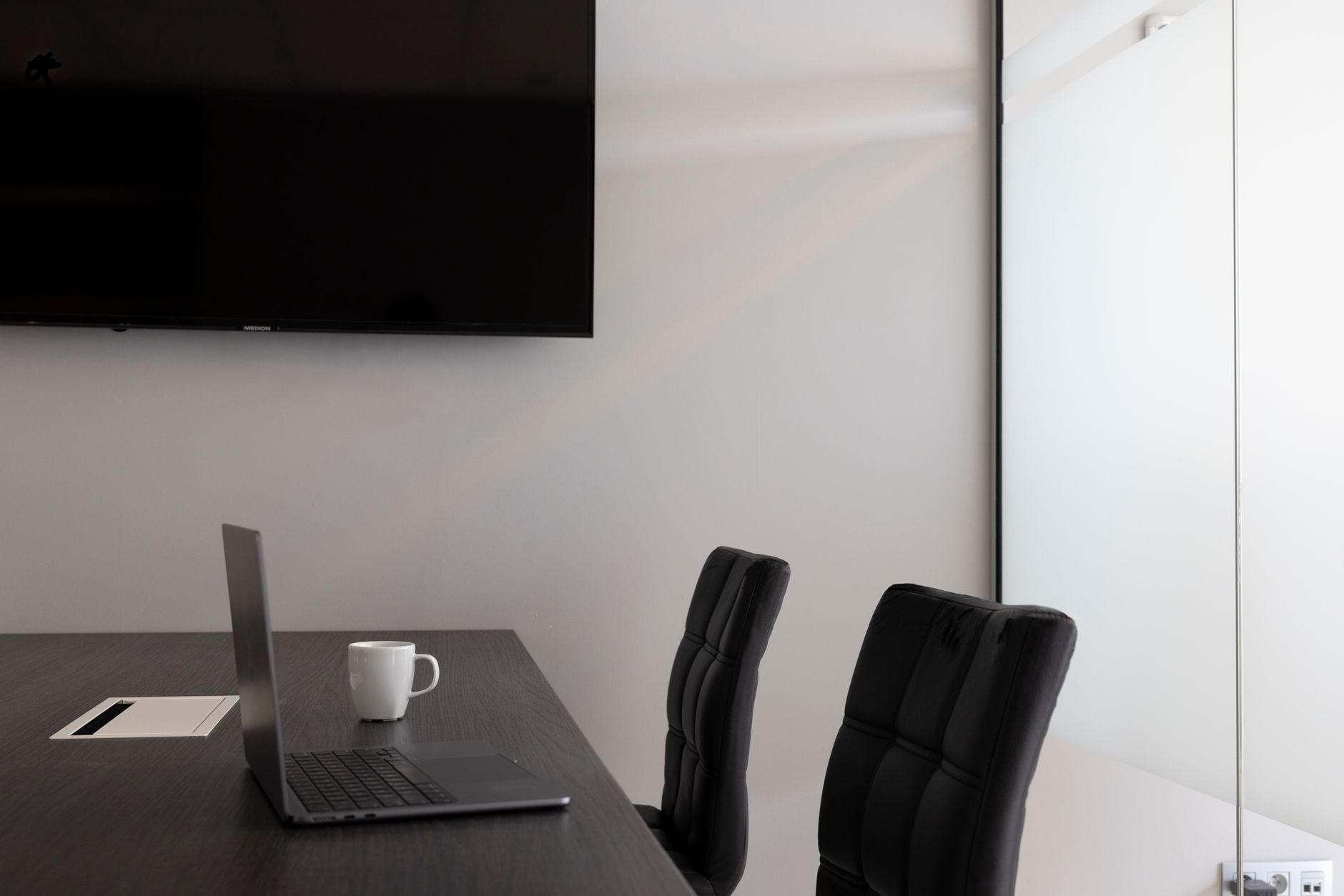
Spacious empty conference room with modern design and neatly arranged black chairs. Photo: Skills Media / Pexels
In the rapidly evolving landscape of corporate technology, the choice of display solutions extends far beyond simple entertainment. For businesses, smart TVs are no longer just about vibrant visuals; they are integral components of communication, collaboration, and operational efficiency. The decision between a specialized enterprise solution like Omi TV and the ubiquitous offerings from leading consumer brands such as Samsung, LG, and Sony, requires a nuanced understanding of corporate demands versus consumer-grade capabilities. Omi TV has carved out a distinct niche by focusing primarily on the enterprise segment, tailoring its hardware and software to meet the stringent requirements of businesses. This often means prioritizing features like enhanced security, centralized management, robust API integration, and customizable operating systems that can be adapted for specific corporate workflows. While consumer brands excel in delivering a vast array of entertainment options and intuitive user interfaces for individual households, their corporate counterparts, though often robust, might sometimes lack the deep customization and dedicated support structure that businesses require for large-scale deployments. For instance, a corporation might need to integrate its smart TVs with existing video conferencing platforms, digital signage software, or internal content management systems. Omi TV's proposition often includes a more open architecture and dedicated SDKs (Software Development Kits) that facilitate such complex integrations, allowing IT departments greater control and flexibility. Leading brands, while offering business lines, sometimes port over consumer OS elements that may not be optimized for corporate use, potentially introducing unnecessary features or security vulnerabilities if not properly managed. The total cost of ownership (TCO) also becomes a critical factor. Beyond the initial purchase price, businesses must consider ongoing software licensing, maintenance agreements, energy consumption, and the cost of IT support. Omi TV often positions itself with a transparent TCO model, factoring in enterprise-grade durability and long-term support. On the other hand, leading brands might have more competitive upfront costs due to economies of scale, but the long-term support and customization might come at a premium or require third-party solutions. The sheer volume of models and features offered by leading brands can be overwhelming for a corporate buyer trying to identify the best fit. Omi TV, with its more focused product line, aims to simplify this decision by presenting solutions directly aligned with common business challenges. This targeted approach can streamline procurement and deployment processes, reducing the burden on IT teams. Furthermore, the commitment to corporate data security is often a differentiating factor. Enterprise-focused solutions typically build security from the ground up, adhering to industry standards and offering features like secure boot, data encryption, and advanced network protection. While leading consumer brands have made significant strides in security, their primary development focus remains on the broader consumer market, which may not always align with the rigorous compliance and security audits prevalent in corporate environments. The distinction lies in the foundational design philosophy: Omi TV is built for work, while leading brands adapt their entertainment platforms for work. Understanding this fundamental difference is crucial for any business seeking to make an informed investment in smart display technology.

Feature Comparison: Omi TV's Enterprise Strengths vs. Consumer Brand Ecosystems
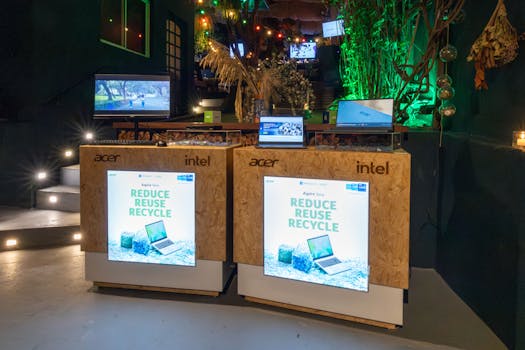
Acer and Intel electronic displays promote sustainability at a green-themed event. Photo: Matheus Bertelli / Pexels
When evaluating Omi TV against leading smart TV brands for corporate applications, a detailed feature comparison reveals distinct strengths and weaknesses. Leading consumer brands like Samsung, LG, and Sony boast vast ecosystems, offering a wide range of content apps, intuitive user interfaces, and seamless integration with other consumer electronics. Their strength lies in their brand recognition, extensive distribution networks, and the sheer volume of research and development poured into enhancing the user entertainment experience. For a corporate setting, this translates to robust display technology, often with excellent picture quality (4K, OLED, QLED) and sound. However, their operating systems (Tizen for Samsung, webOS for LG, Android TV for Sony) are primarily designed for home use, which means they come pre-loaded with numerous consumer applications that may be irrelevant or even pose security risks in a business environment. While these brands offer 'business' or 'hospitality' versions, these are often modified consumer models rather than ground-up enterprise solutions. Omi TV, conversely, differentiates itself through its enterprise-specific features. Its operating system is typically leaner, more secure, and highly customizable, allowing businesses to remove unnecessary features and install only approved corporate applications. This focus on a streamlined, business-centric OS reduces the attack surface for cyber threats and simplifies IT management. Remote device management is another area where Omi TV often excels. While leading brands offer some level of remote management, Omi TV's solutions are usually designed for large-scale deployments, providing granular control over device settings, content scheduling, software updates, and troubleshooting from a central dashboard. This is invaluable for IT departments managing hundreds or thousands of displays across multiple locations. Integration capabilities are also a key differentiator. Omi TV often provides more accessible APIs and SDKs, enabling businesses to seamlessly integrate their smart TVs with existing corporate infrastructure, such as room booking systems, corporate communication platforms, and custom applications. This level of integration is often more complex or requires third-party middleware with consumer-focused brands, potentially increasing implementation costs and complexity. Furthermore, Omi TV may offer specialized hardware features tailored for corporate use, such as enhanced durability, fanless designs for silent operation in meeting rooms, or specific port configurations for industrial applications. While leading brands also offer commercial-grade displays, their emphasis often remains on visual fidelity and design aesthetics, whereas Omi TV prioritizes functionality, reliability, and security for continuous business operation. Customer support and service level agreements (SLAs) are another critical aspect. Omi TV, as an enterprise-focused vendor, typically offers dedicated corporate support channels, faster response times, and tailored service packages designed to minimize downtime for businesses. Leading consumer brands, while having extensive support networks, often categorize business support as a separate, sometimes premium, offering, and their general support lines are geared towards individual consumers. The choice thus boils down to whether a business prioritizes a broad, feature-rich consumer ecosystem with some corporate adaptations, or a purpose-built, highly customizable, and secure enterprise solution designed from the ground up for business needs. For mission-critical applications and large-scale deployments, Omi TV's specialized approach often presents a more compelling long-term value proposition.

For more options, check out monkey-app.net.

Integration, Security, and Scalability: Corporate Imperatives

For corporate environments, the true value of a smart TV extends beyond its display quality to its ability to seamlessly integrate, maintain stringent security, and scale effortlessly with business growth. This is where the distinctions between Omi TV and leading consumer brands become most pronounced. Integration is perhaps the most critical factor for businesses. Smart TVs in a corporate setting are rarely standalone devices; they are part of a larger ecosystem of communication, collaboration, and operational tools. This means they need to integrate smoothly with video conferencing systems (Zoom, Microsoft Teams), digital signage platforms, room scheduling software, and often custom enterprise applications. Omi TV, by design, often offers a more open and developer-friendly platform, providing comprehensive SDKs and APIs that allow IT teams or third-party integrators to build bespoke solutions. This level of flexibility ensures that the smart TVs can become truly embedded within existing corporate workflows, enhancing productivity rather than creating new silos. Leading consumer brands, while often supporting popular third-party apps, may have more restrictive API access or require workarounds to achieve deep integration, potentially increasing development costs and timelines. Security is non-negotiable for any corporate technology. Data breaches, unauthorized access, and network vulnerabilities can have catastrophic consequences. Omi TV's enterprise focus means security is often baked into the core of its operating system and hardware. This includes features like secure boot, which verifies the integrity of the software at startup; robust data encryption for stored content; and advanced network security protocols to protect sensitive corporate communications. They may also offer centralized security management tools, allowing IT administrators to enforce policies, monitor activity, and deploy security patches across all devices from a single console. In contrast, while leading consumer brands have improved their security postures, their primary development objective is mass-market appeal, which can sometimes lead to a broader attack surface due to the inclusion of numerous consumer-oriented services and applications. Corporate versions of these TVs might offer some enhanced security features, but the underlying architecture might still reflect its consumer origins, necessitating additional layers of security management by the corporate IT department. Scalability is another key consideration. As businesses grow, their need for smart display solutions expands. This means adding more units, managing content across diverse locations, and ensuring consistent performance and security. Omi TV's centralized management platforms are typically designed for this kind of large-scale deployment, offering features for bulk configuration, remote diagnostics, and over-the-air updates that simplify the management of hundreds or thousands of devices. This is crucial for maintaining operational consistency and reducing the IT overhead associated with managing a large fleet of smart TVs. While leading brands offer their own device management solutions, they may not always be as finely tuned for enterprise-grade scalability, especially when dealing with complex corporate network environments and specific compliance requirements. The ability to manage devices remotely, deploy content dynamically, and troubleshoot issues without physical intervention becomes paramount in a scaled corporate deployment. For businesses looking for a solution that truly integrates, offers robust security from the ground up, and can scale efficiently, the specialized approach of Omi TV often presents a more compelling and ultimately more cost-effective long-term investment. This allows companies to focus on their core competencies, knowing their display infrastructure is secure and optimized for their unique operational needs, an essential aspect for corporate technology investment.

Making the Right Choice: Tips for Corporate Smart TV Procurement

Navigating the smart TV market for corporate use requires a strategic approach. Here are essential tips to ensure your procurement decision aligns perfectly with your business objectives, whether you lean towards Omi TV or a leading consumer brand's enterprise offering: * **Define Your Use Cases Clearly:** Before even looking at specifications, identify precisely how the smart TVs will be used. Are they for conference rooms, digital signage, interactive kiosks, or employee lounges? Different use cases demand different features, from touch capabilities to specific content scheduling software. This clarity will help filter options effectively. * **Prioritize Security Features:** For corporate environments, security is paramount. Look for TVs that offer secure boot, data encryption, robust network security protocols, and options for disabling unnecessary ports or services. Inquire about the vendor's approach to firmware updates and vulnerability management. Omi TV often leads in this area due to its enterprise focus. * **Evaluate Integration Capabilities:** Your new smart TVs must play well with existing corporate IT infrastructure. Ask about API availability, SDKs, and compatibility with your video conferencing platforms, content management systems, and room booking software. A seamless integration minimizes IT headaches and maximizes productivity. * **Assess Remote Management Tools:** For large deployments, centralized remote management is crucial. Can you remotely deploy content, update firmware, monitor device health, and troubleshoot issues from a single dashboard? This capability significantly reduces operational costs and improves efficiency. * **Consider Total Cost of Ownership (TCO):** Beyond the initial purchase price, factor in software licensing fees, extended warranty options, energy consumption, and the cost of IT support and maintenance. Sometimes, a higher upfront cost for an enterprise-grade solution can result in lower TCO over the product's lifecycle. * **Review Vendor Support and SLAs:** What kind of technical support does the vendor offer for corporate clients? Look for dedicated business support channels, guaranteed response times (SLAs), and availability of on-site service if needed. Consumer-grade support might not meet corporate demands for rapid issue resolution. * **Pilot Program Implementation:** Before committing to a large-scale purchase, deploy a small number of units for a pilot program. Test them thoroughly in your specific corporate environment to identify any compatibility issues, performance bottlenecks, or user experience challenges. This real-world testing is invaluable. * **Scalability for Future Growth:** Ensure the chosen solution can scale with your business. Can the management system handle a growing number of devices? Are there flexible licensing models for expansion? Future-proofing your investment is key.

Comparison

FeatureOmi TV (Enterprise Focus)Samsung/LG/Sony (Enterprise Lines)
Primary Design PhilosophyBuilt for business, security-firstAdapted from consumer, entertainment-centric
Operating SystemLean, customizable, secure (often Linux-based)Tizen/webOS/Android TV (consumer-grade with business mods)
Remote ManagementAdvanced, granular control for large fleetsAvailable, but may be less comprehensive for enterprise
API/SDK for IntegrationExtensive, developer-friendly for deep integrationMore restrictive, may require workarounds
Security FeaturesSecure boot, encryption, enterprise-grade protocolsImproving, but core often consumer-oriented
CustomizationHigh degree of hardware & software customizationLimited to specific business models/settings
Support & SLAsDedicated corporate support, specific SLAsGeneral support, business SLAs often premium
Typical TCOPotentially higher upfront, lower long-term management costLower upfront, potentially higher long-term management complexity

What Readers Say

"For our new corporate headquarters, we needed displays that integrated seamlessly with our custom meeting room booking system. Omi TV's open API was a game-changer, something the big brands couldn't match without significant custom development."

Sarah Chen · New York, NY

"The centralized management of Omi TV for our digital signage across 50 branches is incredibly efficient. We can push content updates and monitor device health from one dashboard, saving countless IT hours compared to our previous setup."

David Lee · San Francisco, CA

"We were initially looking at a well-known brand, but after a deep dive into security protocols, Omi TV offered a far more robust and auditable solution. Their secure boot and encryption features gave our compliance team peace of mind."

Maria Garcia · Austin, TX

"While Omi TV's initial cost was slightly higher than some leading brands' business models, the long-term savings on IT support and custom integration have made it a worthwhile investment. The picture quality is excellent, though not always OLED-level."

Michael Brown · Chicago, IL

"We needed a fleet of interactive displays for our R&D labs. Omi TV provided a tailored solution with specific industrial-grade components and a custom OS that allowed our engineers to develop directly on the platform, something consumer brands couldn't offer."

Jessica Kim · Seattle, WA

Frequently Asked Questions

What is the primary advantage of Omi TV for corporate use compared to leading smart TV brands?

Omi TV's primary advantage lies in its enterprise-first design philosophy, offering enhanced security, deeper customization options, and superior integration capabilities with existing corporate IT infrastructure. It's built from the ground up for business needs, prioritizing manageability and reliability over consumer entertainment features.

Are Omi TVs more expensive than business models from Samsung or LG?

The initial upfront cost for Omi TVs can sometimes be higher due to their specialized enterprise features and lower production volume compared to mass-market consumer brands. However, when considering the Total Cost of Ownership (TCO) over several years, including IT management, security, and integration costs, Omi TV can often prove to be more cost-effective due to its robust design and focused features.

How do Omi TVs handle corporate data security and privacy?

Omi TVs typically incorporate enterprise-grade security features such as secure boot, data encryption, and advanced network security protocols. Their operating systems are often leaner, reducing potential attack surfaces, and they offer centralized security management tools for IT administrators to enforce policies and deploy updates securely across the entire fleet.

Can Omi TVs integrate with existing corporate video conferencing systems?

Yes, Omi TVs are often designed with robust integration capabilities, providing comprehensive APIs and SDKs. This allows for seamless integration with popular video conferencing platforms like Zoom and Microsoft Teams, as well as custom-built corporate applications and room scheduling systems, offering greater flexibility than many consumer-adapted business displays.

What kind of support can businesses expect from Omi TV versus leading brands?

Omi TV, as an enterprise-focused vendor, typically offers dedicated corporate support channels, faster response times, and tailored Service Level Agreements (SLAs) designed to meet business uptime requirements. Leading consumer brands also offer business support, but it might be a separate, often premium, offering compared to their general consumer support.

Who should consider Omi TV for their corporate display needs?

Omi TV is ideal for corporations, government agencies, educational institutions, and healthcare facilities that require highly secure, customizable, and centrally manageable smart display solutions. It's particularly beneficial for large-scale deployments, mission-critical applications, and scenarios demanding deep integration with existing IT infrastructure.

Are there any risks associated with choosing a specialized brand like Omi TV over a well-known market leader?

The primary 'risk' could be less brand recognition or a smaller ecosystem of consumer-focused apps, which is often irrelevant for corporate use. However, reputable specialized brands like Omi TV mitigate this by focusing on robust enterprise features, dedicated support, and long-term product roadmaps tailored for business, often leading to a more reliable and secure solution for specific corporate needs.

What future trends are influencing the corporate smart TV market, and how does Omi TV align?

Future trends include increased demand for AI-driven analytics, enhanced cybersecurity, greater interoperability, and sustainability. Omi TV's customizable OS and open architecture are well-positioned to integrate these emerging technologies, allowing businesses to adapt their display solutions to evolving corporate demands and technological advancements more readily than closed, consumer-centric systems.

Choosing the right smart TV for your corporation is a strategic investment in communication, collaboration, and security. By carefully evaluating Omi TV vs. leading smart TV brands through the lens of your specific corporate needs, you can ensure a solution that drives efficiency, secures your data, and scales with your business. Make an informed decision that empowers your enterprise for the future.

Topics: Omi TV vs. Leading Smart TV Brandscorporate smart TVbusiness display solutionsenterprise television technologysmart TV integration
Leo List
Brampton weed
Adultwork